
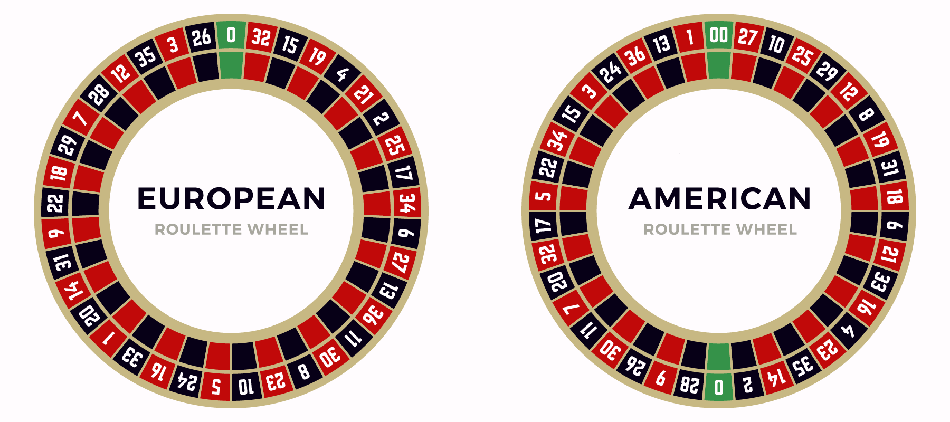
Roulette comes in two main versions that look similar but offer different odds and features. The key difference is that American roulette has an extra 00 pocket on the wheel, which nearly doubles the house edge compared to European roulette. This small change affects every bet a player makes and directly impacts their chances of winning.
Many casino visitors don’t realize these two versions exist or understand why one gives them better odds than the other. The differences go beyond just the extra number and include special rules, betting options, and overall gameplay.
This guide breaks down what sets European and American roulette apart. Players will learn about wheel layouts, house edges, unique betting features, and which version offers better value. Understanding these differences helps players make smarter choices at the casino table.
Fundamental Differences Between European and American Roulette
The primary distinctions between these two roulette versions stem from the wheel design and table arrangement. European roulette uses 37 pockets with a single zero, while American roulette features 38 pockets with both a zero and double zero.
Number of Pockets and Wheel Layout
The roulette wheel layout differs significantly between the two versions. European roulette contains 37 numbered pockets: numbers 1 through 36 plus one green zero pocket. American roulette adds an extra pocket for a total of 38, including numbers 1 through 36, a zero, and a double zero.
The number arrangement on each wheel follows a different pattern. European wheels organize numbers in a specific sequence that alternates between high and low numbers. American wheels use a different ordering system that places the double zero directly opposite the single zero.
Both wheels use red and black colors for numbered pockets. The zero pockets always appear in green to distinguish them from regular betting numbers. This color scheme remains consistent across both versions.
Single Zero vs Double Zero
The single zero in European roulette gives the house an edge of 2.7%. This means players can expect to lose about 2.7 cents for every dollar wagered over time.
American roulette’s double zero wheel increases the house advantage to 5.26%. The extra zero pocket nearly doubles the casino’s edge compared to the European version. Players lose approximately 5.26 cents per dollar bet in the long run.
The double zero pocket creates an additional losing outcome for most bets. When either zero or double zero hits, standard number bets and outside bets lose. This extra losing pocket makes American roulette less favorable for players.
Roulette Table Layout and Design
The roulette table displays all available betting options. European tables typically position outside bets (red/black, odd/even, high/low) on both long sides of the betting area. American tables place these outside bets on just one side.
American roulette tables tend to be more compact than their European counterparts. The table layout includes a special five-number bet covering 0, 00, 1, 2, and 3. This bet only exists in American roulette and carries a house edge of 7.89%.
European tables often accommodate two dealers: a croupier and a table umpire. American tables usually operate with a single dealer who manages all aspects of the game.

House Edge and Player Odds
The house edge determines how much money the casino keeps from every bet over time, and the single versus double zero makes a massive difference in actual dollars lost. European roulette’s 2.7% house edge cuts the casino’s advantage nearly in half compared to American roulette’s 5.26% edge.
House Edge Comparison
European roulette delivers a 2.7% house edge across all standard bets because the wheel contains just one zero among 37 total pockets. American roulette pushes that edge to 5.26% by adding a second zero pocket, creating 38 total spaces. The math is straightforward: one zero divided by 37 pockets equals 2.7%, while two zeros divided by 38 pockets equals 5.26%.
Every bet on the table carries this house edge except one. American roulette’s basket bet, which covers 0-00-1-2-3, has a 7.89% house edge. This five-number combination represents the worst bet a player can make at any roulette table.
House Edge by Game Type:
| Roulette Version | House Edge | Zero Pockets |
|---|---|---|
| European | 2.7% | 1 (single 0) |
| American | 5.26% | 2 (0 and 00) |
| American Basket Bet | 7.89% | 2 (0 and 00) |
How the Extra Zero Affects Odds
The extra zero pocket reduces winning probability on every single bet without changing roulette payouts. A bet on red still pays 1:1 in both games, but European roulette gives players 18 winning numbers out of 37 total pockets (48.6% chance), while American roulette offers 18 winners out of 38 pockets (47.4% chance).
Straight-up bets on single numbers demonstrate this clearly. Betting on number 17 pays 35:1 regardless of which wheel you play. European roulette gives you 1-in-37 odds (2.7% probability), while American roulette drops to 1-in-38 odds (2.63% probability).
Even money bets show the biggest practical impact. Red/black, odd/even, and high/low bets all hover near 50/50 on European wheels but drop to 47.4% on American wheels. That difference compounds rapidly across hundreds of spins.
Impact on Bankroll Over Time
A $100 bet on red loses $2.70 on average per spin in European roulette versus $5.26 per spin in American roulette. Over 100 spins at $10 per bet, players can expect to lose $270 on European wheels compared to $526 on American wheels. The bankroll drain doubles simply because of one extra pocket.
Extended play sessions amplify this gap. A player making 1,000 spins at $5 per bet faces $135 in expected losses on European roulette versus $263 on American roulette. That’s $128 more money going to the house for identical gameplay and identical roulette payout structures.
The difference matters most for regular players who accumulate thousands of spins over time. Weekend players betting $25 per spin across 500 spins will lose approximately $338 on European tables versus $658 on American tables. The math doesn’t change based on betting systems or strategies.

Rules and Special Features
European roulette includes player-friendly rules like La Partage and En Prison that can cut the house edge in half on even-money bets. American roulette offers the five number bet, which covers five pockets but comes with the worst odds on the table. Call bets provide a faster way to place complex wagers in European games.
La Partage and En Prison Rules
La Partage gives players back half their stake on even-money outside bets when the ball lands on zero. If a player bets $20 on red and the ball hits zero, they get $10 back instead of losing everything. This rule drops the house edge from 2.70% to 1.35% on affected bets.
En Prison works differently but achieves similar results. When zero hits, the player’s even-money bet gets “imprisoned” for the next spin. If the bet wins on the second spin, the original stake returns with no profit. If it loses, the casino takes the bet. Some players prefer En Prison because it offers a chance to recover the full amount.
Not all European roulette tables offer these rules. Players should check the table rules before playing. These features only apply to outside bets like red/black, odd/even, and high/low.
Call Bets in European Roulette
Call bets let players quickly wager on groups of numbers based on their position on the wheel rather than the table layout. Voisins du Zero covers 17 numbers near zero and requires nine chips. Tiers du Cylindre covers 12 numbers opposite zero with six chips. Orphelins covers the eight remaining numbers with five chips.
These bets speed up gameplay for experienced players who want to cover specific wheel sections. The dealer places the chips after the player announces the bet. Some casinos require players to have chips on the table before calling bets to prevent disputes.
Call bets appear most often in European roulette because the wheel layout makes these groupings logical and balanced.
The Five Number Bet in American Roulette
The five number bet covers 0, 00, 1, 2, and 3 in American roulette. It pays 6:1 when it wins. This bet has a house edge of 7.89%, which makes it the worst wager available on either roulette version.
Players place this bet at the corner where 0, 00, and 1 meet on the table layout. The bet is sometimes called a “basket bet” or “top line bet.” Most experienced players avoid it completely.
The five number bet exists only because American roulette has both 0 and 00. European roulette has no equivalent wager. Players looking for better odds should stick to standard inside and outside bets that carry the normal 5.26% house edge.
Types and Variants of Roulette
Roulette comes in several distinct versions, with European and American being the most common. French roulette offers unique rules that can benefit players, while the choice between live and online formats affects the gaming experience.
Overview of Major Roulette Variants
Three main roulette variants dominate casinos worldwide. European roulette features 37 pockets numbered 0-36, giving it a house edge of 2.70%. American roulette adds a double zero (00) pocket for a total of 38 pockets, which increases the house edge to 5.26%.
French roulette uses the same 37-pocket wheel as European roulette but includes special betting rules. The layout and table design differ slightly between all three variants. Mini roulette exists as a smaller version with fewer numbers, though it remains far less popular.
Key Differences Between Major Variants:
- European: Single zero, 2.70% house edge
- American: Double zero, 5.26% house edge
- French: Single zero with special rules, lowest house edge
French Roulette vs European Roulette
French roulette and European roulette share the same wheel with 37 pockets. The critical difference lies in two French rules: La Partage and En Prison.
La Partage returns half of even-money bets when the ball lands on zero. En Prison allows players to leave even-money bets for the next spin after a zero result. These rules reduce the house edge to 1.35% on even-money bets.
The table layout also differs. French roulette tables display terms in French and arrange the betting grid differently. European roulette uses English terms and a more familiar layout for most players.
Comparing Live and Online Roulette
Online roulette uses random number generators to determine results instantly. Players can access games 24/7 from any location and often find lower minimum bets. The software displays results immediately without waiting for a physical wheel to stop spinning.
Live roulette streams real dealers and physical wheels through video. This format recreates the casino atmosphere while maintaining online convenience. Players see actual spins happen in real-time and can interact with dealers through chat.
Both formats offer European and American variants. Live games typically have higher minimum bets and operate on set schedules. Online versions allow faster gameplay and often include game statistics and betting history tools.
Betting Options and Payouts
Both American and European roulette offer the same basic betting structure with identical payouts. The main difference lies in the odds of winning due to the extra double zero on the American wheel, which slightly reduces the probability of success for every bet type.
Inside and Outside Bets
Inside bets cover specific numbers or small groups of numbers on the roulette table layout. A straight-up bet on a single number pays 35 to 1 in both versions. Split bets cover two adjacent numbers and pay 17 to 1, while street bets span three numbers in a row for an 11 to 1 payout.
Corner bets cover four numbers at once and pay 8 to 1. Six-line bets span two rows of three numbers each, offering a 5 to 1 payout.
Outside bets cover larger groups of numbers and offer better odds of winning with lower payouts. Red or black bets pay 1 to 1 and cover 18 numbers each. Odd or even bets also pay 1 to 1 with the same coverage. High or low bets divide the numbered sections into 1-18 or 19-36.
Column and dozen bets each cover 12 numbers and pay 2 to 1. These outside bets give players nearly 50% odds in European roulette but slightly less in American roulette.
Payout Structure in Both Versions
The roulette payout rates stay the same across both game versions. A straight-up bet always pays 35 to 1, whether played on an American or European table. Split bets consistently pay 17 to 1, and corner bets pay 8 to 1 in both formats.
The key difference appears in the winning probability. European roulette offers 2.70% odds on a straight-up bet, while American roulette provides 2.63% odds. Outside bets show a clearer gap: red or black bets have 48.65% odds in European roulette compared to 47.37% in American roulette.
This difference stems from the extra green pocket on the American wheel. With 38 total segments instead of 37, every bet type faces slightly lower odds of success.
| Bet Type | Payout | European Odds | American Odds |
|---|---|---|---|
| Straight up | 35 to 1 | 2.70% | 2.63% |
| Split | 17 to 1 | 5.40% | 5.26% |
| Street | 11 to 1 | 8.10% | 7.89% |
| Corner | 8 to 1 | 10.80% | 10.52% |
| Red/Black | 1 to 1 | 48.65% | 47.37% |
Unique Bets to Each Version
American roulette includes the five-number bet, which covers 0, 00, 1, 2, and 3. This bet pays 6 to 1 and carries a house edge of 7.89%, making it the worst bet on the table. Players should avoid this option due to its poor odds compared to other available bets.
European roulette features special call bets not found in the American version. Voisins du Zéro covers 17 numbers around the zero on the wheel. Tiers du Cylindre spans 12 numbers on the opposite side of the wheel from zero.
Orphelins covers eight numbers in two separate wheel sections. These call bets require multiple chips and follow specific patterns based on wheel position rather than table layout. Many European tables display a special betting area for these options.
Choosing Between European and American Roulette
European roulette offers better odds due to its single zero wheel, while American roulette features an extra double zero that increases the house edge. Players should weigh factors like risk tolerance, game availability, and betting strategies when selecting which version to play.
Factors to Consider for Players
The house edge stands as the most important difference between these two versions. European roulette has a house edge of 2.7%, while American roulette sits at 5.26%. This means players lose money at nearly twice the rate on an American roulette table.
Betting options remain mostly the same across both versions. Players can make inside bets on specific numbers or outside bets on red/black and odd/even.
The wheel layout directly impacts winning chances. European wheels contain 37 pockets numbered 0-36. American wheels have 38 pockets with an added 00 slot. This extra pocket cuts the probability of winning on any single number bet.
Payout rates stay identical in both games. A straight-up bet on one number pays 35:1 whether playing European or American roulette. However, the lower odds of hitting that number on an American wheel make the bet less valuable over time.
Risk Management and Strategies
A smaller house edge means a bankroll lasts longer on European roulette. Players can expect fewer losses per 100 spins compared to the American version. This makes European roulette better for extended playing sessions.
Common roulette strategies work on both versions but perform better on European tables. The Martingale system, which doubles bets after losses, drains funds faster on American roulette due to the higher house edge.
Players should adjust bet sizing based on which version they play. Smaller bets relative to total bankroll help offset the increased house advantage in American roulette.
Availability in Casinos and Online
European roulette dominates in most parts of the world. Physical casinos in Europe, Asia, and other regions typically offer only the European version. American casinos provide both options but feature more American roulette tables.
Roulette online gives players access to both versions regardless of location. Most gambling sites offer European roulette as their standard game. Some platforms also include French roulette, which uses European rules with additional betting options.
Players in the United States often find American roulette more readily available at land-based venues. However, online platforms allow American players to choose European roulette for better roulette odds without traveling abroad.
Frequently Asked Questions
The wheel structure, house edge percentages, and betting options create distinct mathematical environments in each version. Players often seek clarity on specific rule differences, historical perspectives, and strategic considerations.
What are the primary differences in the wheel layout between European and American Roulette?
The European wheel contains 37 pockets numbered 1 through 36 plus a single zero. The American wheel has 38 pockets with numbers 1 through 36, a zero, and a double zero.
This single pocket difference changes the probability of every outcome. The extra double zero pocket on American wheels reduces the likelihood of winning on any given bet.
The number arrangement also differs between the two wheels. While both alternate red and black pockets, the specific sequence of numbers follows different patterns on each wheel design.
How do the house edges compare between European and American Roulette?
European roulette has a house edge of 2.7 percent due to its single zero pocket. American roulette carries a house edge of 5.26 percent because of the added double zero.
The difference stems directly from the probability shift created by the extra pocket. With 37 total pockets, European roulette gives players better mathematical odds on every bet type.
American roulette’s 38 pockets mean more outcomes favor the house. Over extended play sessions, this difference affects how quickly bankrolls deplete and how often wins occur.
Some European tables offer La Partage or En Prison rules on even money bets. These rules can lower the effective house edge to approximately 1.35 percent when zero appears.
Can you explain the different betting strategies suitable for European and American Roulette?
Common betting strategies work on both wheel types but perform differently due to house edge variations. Systems like Martingale, where players double their bet after losses, face higher risk on American wheels because the house advantage compounds faster.
Flat betting maintains the same wager size across spins. This approach works more efficiently on European wheels since the lower house edge extends session length.
Progressive systems that adjust bet sizes based on outcomes do not change the underlying probabilities. The house edge remains constant regardless of betting pattern.
Players using even money bets on European tables with La Partage or En Prison rules experience better statistical outcomes. These rules provide partial protection when zero appears, making systematic betting approaches more viable.
What payout differences should players expect when playing European vs. American Roulette?
Both versions use identical payout ratios for all bet types. A straight bet on a single number pays 35 to 1 in both games.
Split bets pay 17 to 1, street bets pay 11 to 1, and corner bets pay 8 to 1 on both wheels. Outside bets like red or black, odd or even, and high or low all pay 1 to 1 in both formats.
The difference lies in winning probability, not payout amounts. While a straight bet pays 35 to 1 in both games, the chance of winning is 1 in 37 on European wheels versus 1 in 38 on American wheels.
This creates a gap between true odds and payout odds. The house edge emerges from this mathematical discrepancy, which is larger on American wheels due to the extra pocket.
What do the terms ‘1st 12’, ‘2nd 12’, and ‘3rd 12’ refer to in the context of roulette betting?
These terms identify dozen bets, which are outside wagers covering 12 consecutive numbers. The 1st 12 covers numbers 1 through 12, the 2nd 12 covers 13 through 24, and the 3rd 12 covers 25 through 36.
Dozen bets pay 2 to 1 when successful. They appear on both European and American tables in the same format.
These bets cover nearly one-third of the numbered pockets but exclude zero and double zero. On a European wheel, a dozen bet has an 18.92 percent chance of winning, while on an American wheel the probability drops to 18.42 percent.
What observations did Albert Einstein reportedly make regarding the game of Roulette?
Einstein is often quoted as saying that the only way to beat roulette is to steal money from the table when the dealer is not looking. This statement reflects the mathematical reality that no betting system can overcome the house edge.
The quote emphasizes that roulette outcomes follow fixed probability distributions. No pattern of previous results can predict future spins because each spin is an independent event.
Einstein’s observation aligns with statistical analysis showing that all betting systems eventually succumb to the house advantage. The statement serves as a reminder that roulette is designed with a built-in mathematical edge favoring the casino.